Quick summary
- Acute sinusitis is usually caused by a virus, tends to improve within 7–10 days and does not need antibiotics [1].
- Antibiotics are considered when symptoms do not improve after 10 days, are severe (high fever, pus, strong facial pain), or get worse after an initial improvement [1][2].
- Chronic sinusitis means a blocked nose, discharge, facial pain or pressure, or reduced smell lasting 12 weeks or more [1][2].
- Saline rinses and steroid nasal sprays are the basis of treatment. Sinus surgery is discussed if proper medical treatment fails or complications occur.
Contents
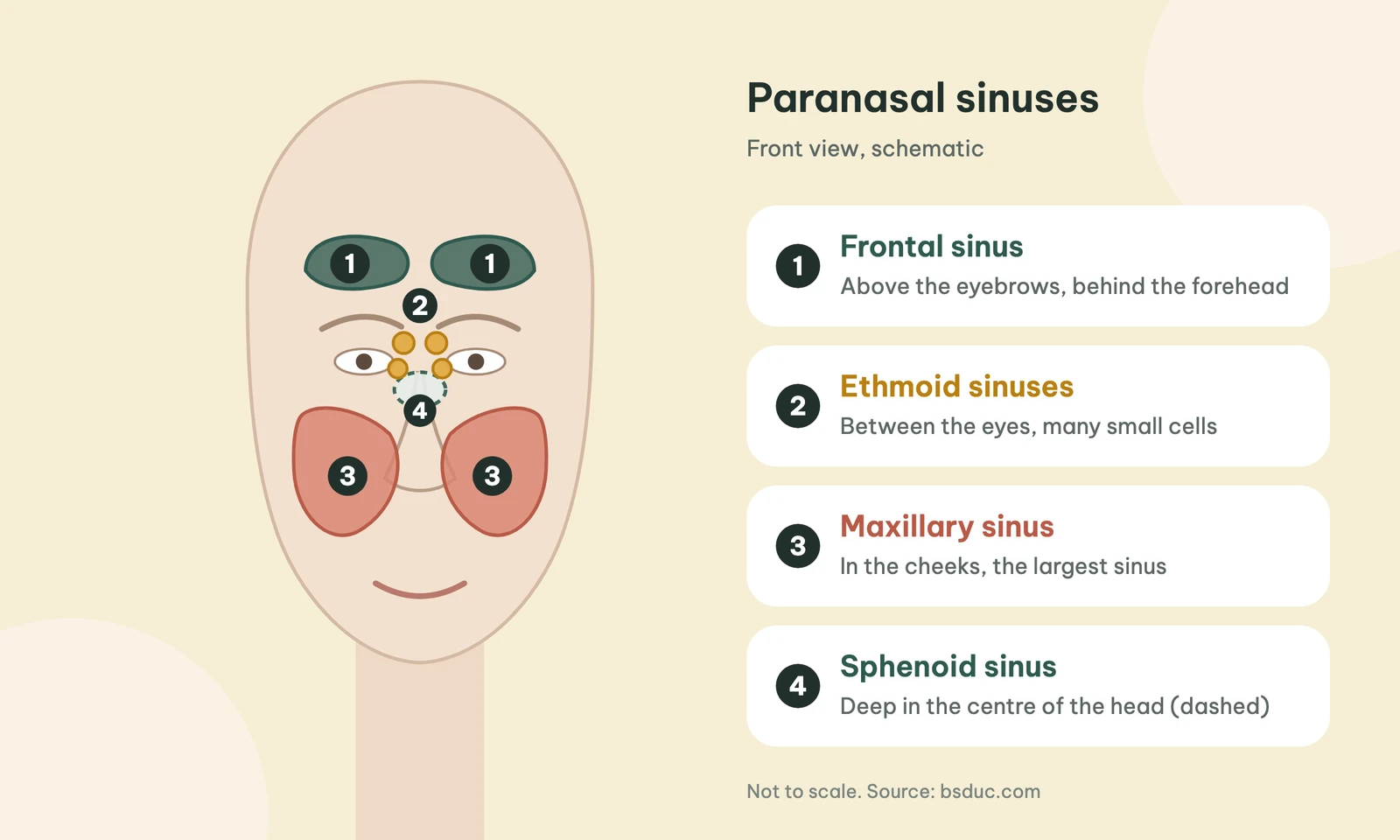
Sinusitis is inflammation of the lining of the sinuses, the air-filled spaces around the nose. It almost always comes together with inflammation inside the nose, so doctors often say “rhinosinusitis”. It ranges from a cold that drags on to a long-lasting condition with a blocked nose, loss of smell and facial pressure for months. Knowing when home care is enough and when to see an ENT or sinus doctor helps you avoid unnecessary medicines.
Symptoms of sinusitis
- Nasal blockage and difficulty breathing through the nose.
- Thick yellow or green discharge; mucus running down the back of the throat causing cough, throat clearing or bad breath.
- Pain or pressure in the cheeks, forehead or between the eyes, worse when bending forward.
- Reduced or lost sense of smell.
- Sometimes mild fever, tiredness or toothache in the upper teeth.
Note: yellow or green mucus does not automatically mean you need antibiotics. The colour only shows that inflammatory cells are present and also occurs in an ordinary cold.
Acute and chronic sinusitis
- Acute: starts suddenly and lasts less than 4 weeks. It is usually a viral illness after a cold; only a small share is bacterial [1].
- Chronic: two or more symptoms (blockage, discharge, facial pain or pressure, reduced smell) lasting at least 12 weeks, with signs of inflammation on endoscopy or CT [1]. Causes include allergy, nasal polyps, a deviated septum, enlarged turbinates, fungus and other anatomical factors.
When are antibiotics needed?
Most acute sinusitis improves with supportive care. A doctor considers antibiotics when the picture suggests a bacterial infection: symptoms lasting 10 days or more without improvement, a severe start (high fever, pus, strong facial pain for several days in a row), or getting worse after first getting better [1]. Taking antibiotics without a clear indication does not shorten the illness but increases the risk of side effects and resistance.
Self-care
- Rinse the nose with saline to thin and wash out mucus.
- Drink enough water, rest, and avoid very dry air.
- Use ordinary pain relievers and fever reducers as directed if needed.
- Steroid nasal sprays prescribed by a doctor can reduce inflammation of the lining [1].
- Do not use decongestant drops or sprays for more than a few days in a row; the blockage can get worse when you stop.
- Avoid tobacco smoke, dust and strong chemical smells.
When to see an ENT doctor
- Symptoms last more than 10 days, or get worse after improving.
- High fever, severe facial pain or headache.
- Blockage, discharge and pressure keep returning several times a year.
- Symptoms last more than 12 weeks.
- Blockage on one side only, repeated nosebleeds, or foul-smelling discharge from one side (a polyp, foreign body or growth must be excluded).
- A child with long-lasting thick nasal discharge, snoring and mouth breathing (adenoids may be involved).
Go to emergency care for swelling and redness around the eye, double vision or reduced vision, severe headache, stiff neck, confusion or seizures: these can be complications of sinusitis.
Nasal endoscopy and other treatments
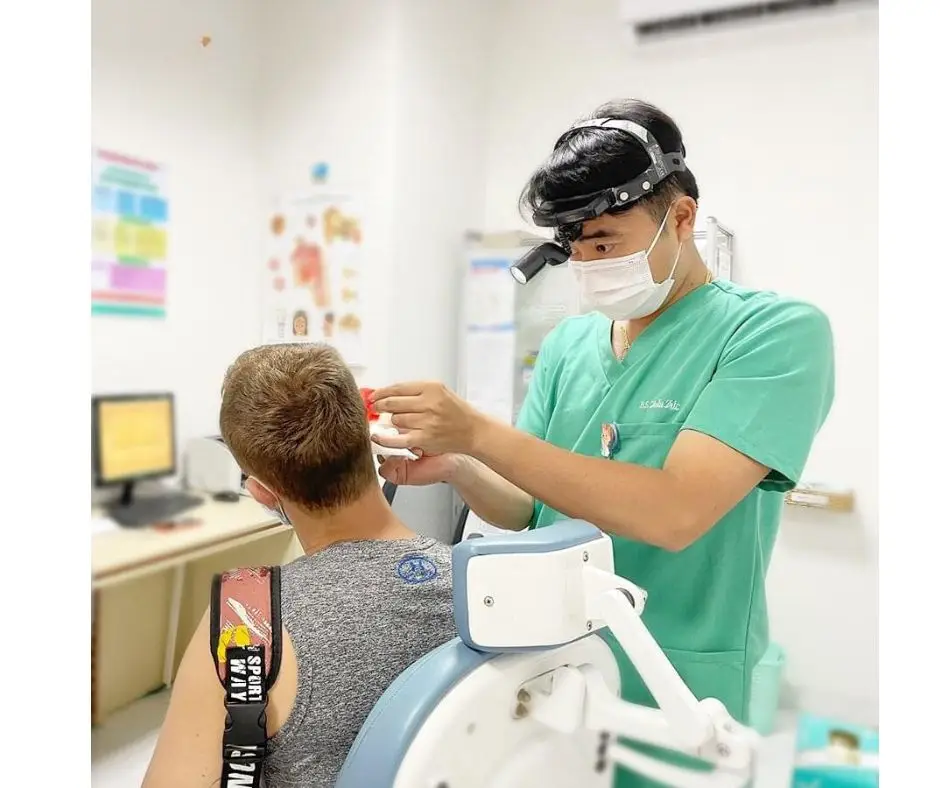
For long-lasting or repeated sinusitis, nasal endoscopy lets the doctor see the lining, nasal passages, polyps, septum and the place where mucus collects. Sometimes a sinus CT scan is needed for detail. Based on the cause, the doctor may treat any allergy, prescribe medicines for long enough, and discuss endoscopic sinus surgery to open drainage, remove polyps or correct the septum and turbinates when medical treatment has not worked. The decision rests on your examination and scans.
More about this service: sinusitis and allergic rhinitis care in Nha Trang.
References
- Rosenfeld RM, et al. Clinical Practice Guideline (Update): Adult Sinusitis. Otolaryngol Head Neck Surg. 2015;152(2 Suppl):S1–S39.
- Fokkens WJ, et al. European Position Paper on Rhinosinusitis and Nasal Polyps 2020. Rhinology. 2020;58(Suppl S29):1–464.
This article is for reference only and does not replace an examination and diagnosis by a doctor.